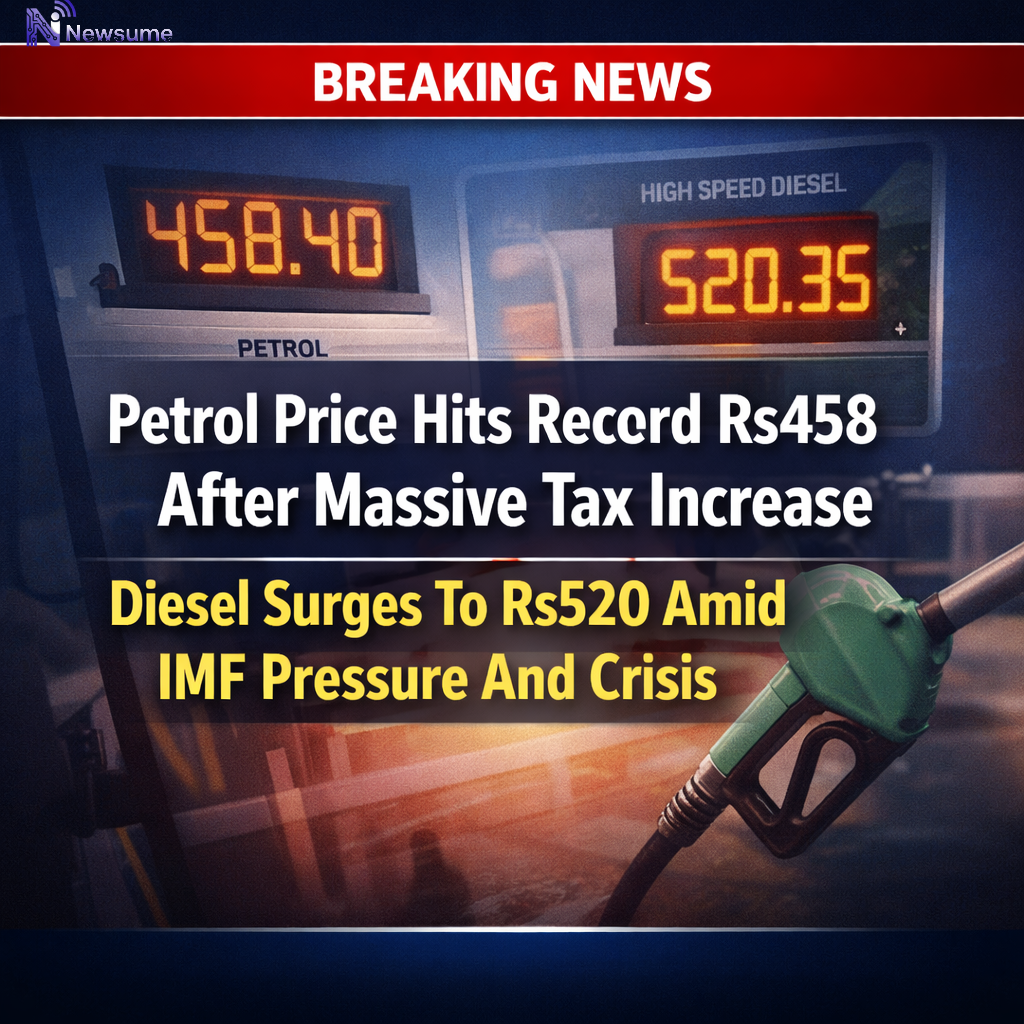
Pakistan has witnessed an unprecedented surge in fuel prices after the government significantly increased petroleum taxes, pushing petrol and diesel rates to historic highs. The move comes amid ongoing economic challenges and pressure from the International Monetary Fund (IMF).
The federal government raised the price of petrol by Rs137 per litre, bringing it to a record Rs458.4 per litre. This sharp increase was largely driven by a rise in the petroleum levy, which has been increased to Rs161 per litre from Rs106, adding an extra Rs55 in taxes. The hike exceeds global market trends, indicating that domestic policy decisions played a major role.
High-speed diesel prices also saw a major jump, rising by Rs185 per litre to reach Rs520.35 — the highest level in Pakistan’s history. While the petroleum levy on diesel has been removed, a carbon levy of Rs2.5 per litre and other import-related taxes remain in place.
Officials introduced these increases after failing to secure additional fuel subsidies from the IMF, which has capped subsidy limits. The inability to meet tax targets and negotiate relief has further restricted the government’s fiscal space, leading to increased reliance on fuel taxation.
This marks the second major fuel price hike within a month, with petrol prices rising by a total of 63% and diesel by 75% during this period. The government has indicated that part of the additional revenue from petrol taxes will be used to offset diesel costs, effectively shifting the burden onto petrol consumers.
Global factors have also contributed to rising fuel costs. Escalating geopolitical tensions, particularly following US and Israeli strikes on Iran and Tehran’s closure of the Strait of Hormuz, have disrupted oil supplies and driven international prices higher.
Other petroleum products have also become more expensive, with kerosene reaching Rs468 per litre and light diesel oil increasing to Rs395 per litre. These rising costs are expected to impact transportation, food prices, and overall inflation across the country.
Despite earlier austerity promises, criticism has grown over government spending and policy decisions, as the economic burden continues to fall on ordinary citizens. With poverty, unemployment, and income inequality already at high levels, the fuel price surge is likely to further strain household budgets.
In conclusion, the latest fuel price hike reflects a combination of domestic fiscal challenges and global energy pressures. As Pakistan navigates its economic crisis, the rising cost of fuel is expected to have widespread effects on inflation and daily life for millions of citizens.