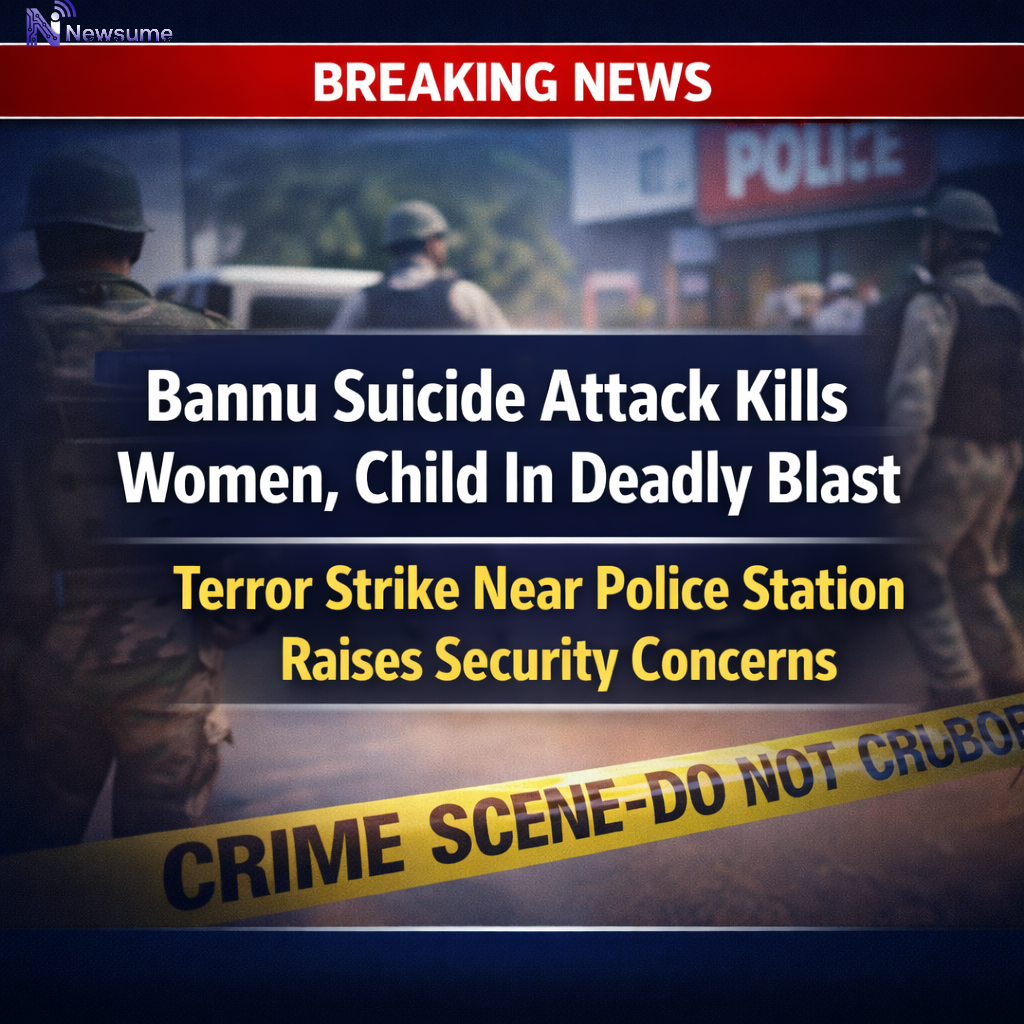
A deadly suicide bombing in Bannu has claimed the lives of five civilians, including women and a child, raising fresh concerns over rising terrorism in Khyber Pakhtunkhwa (KP). The attack highlights ongoing security challenges despite continued counter-terrorism operations in the region.
According to security sources, the blast occurred near the Domail police station, where a suicide bomber attempted to target civilians gathered outside the facility. The attack resulted in the deaths of five individuals, including three women and a child, while four others were seriously injured. The wounded were immediately shifted to nearby hospitals for treatment.
Authorities confirmed that the attack was carried out by militants linked to Fitna al-Khawarij. Security and rescue teams quickly reached the site, clearing debris, assisting victims, and launching search operations in the surrounding area.
The incident comes amid intensified military actions in KP. The Inter-Services Public Relations (ISPR) reported that at least 22 militants have been killed in the province since April 1. In recent operations, 13 India-backed militants were eliminated in intelligence-based missions in Khyber district and Bannu, while another eight were neutralised along the Pakistan-Afghanistan border in North Waziristan.
Pakistan has witnessed a surge in terrorist activity, particularly in KP and Balochistan, since 2021 following the return of the Afghan Taliban to power. In response, the country launched Operation Ghazab lil-Haq, during which hundreds of militants were killed, injured, or displaced, and numerous militant positions were destroyed.
Tensions along the Pakistan-Afghanistan border have also contributed to instability. In October 2025, cross-border clashes resulted in significant casualties on both sides. Despite multiple rounds of negotiations, efforts to curb militant activity have faced challenges due to a lack of decisive action against terrorist groups.
The Bannu attack underscores the persistent threat of terrorism in Pakistan and the need for continued vigilance and coordinated security measures to protect civilians and maintain regional stability.