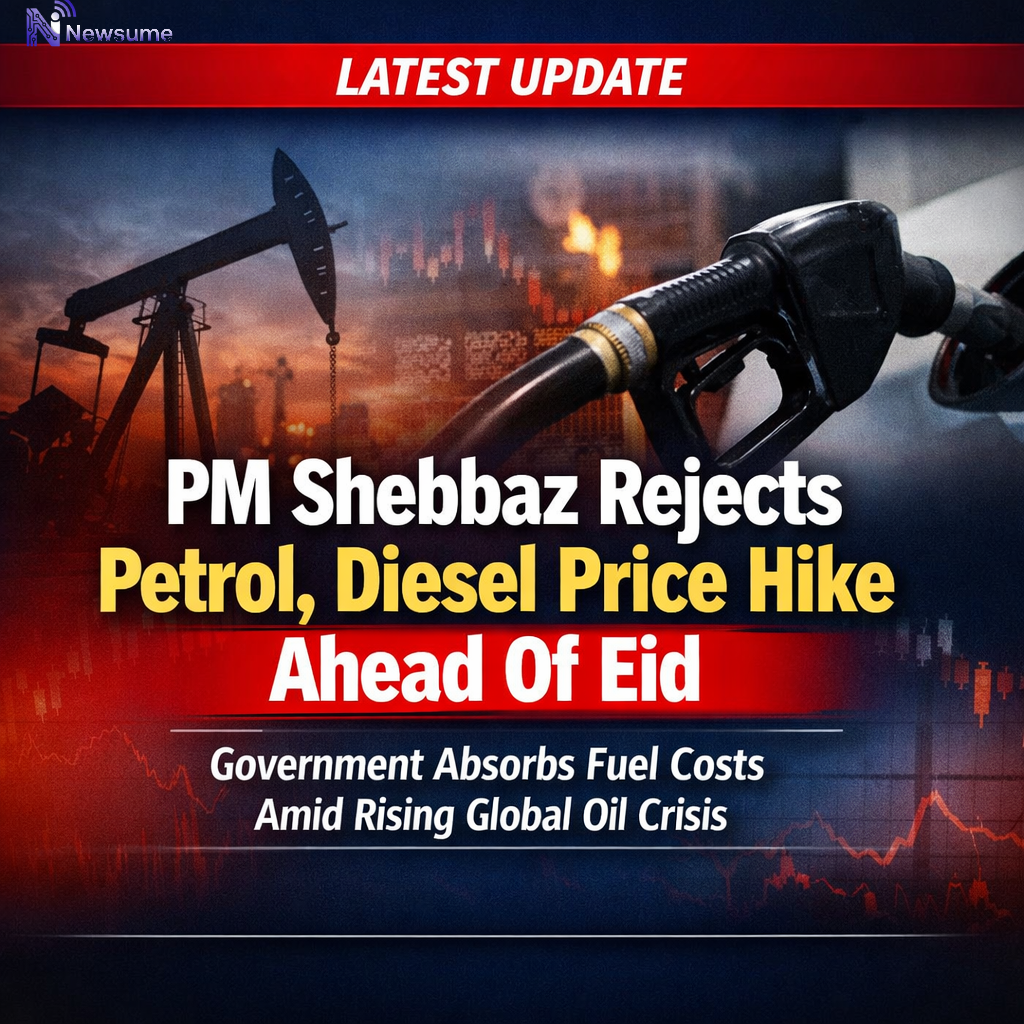
Prime Minister Shehbaz Sharif has refused proposals to further increase petrol and diesel prices, offering temporary relief to citizens ahead of Eidul Fitr despite rising global oil costs.
In a national address, the premier said he rejected multiple recommendations to raise fuel prices, acknowledging the financial strain already faced by the public after a recent increase of Rs55 per litre earlier this month. He emphasized that the government would absorb the additional burden to ease pressure on citizens during the festive period.
The decision comes amid a worsening global energy crisis linked to ongoing conflict in the Middle East, which has sharply driven up international oil prices. According to the prime minister, crude oil prices surged from around $72 per barrel to over $158 within weeks, creating serious economic challenges worldwide.
To manage the situation, the government has already implemented austerity measures and reduced development spending. PM Shehbaz revealed that the state has borne a financial burden of approximately Rs69 billion over the past two weeks to prevent a cumulative increase of Rs127 per litre in petrol and Rs252 per litre in diesel prices.
He further disclosed that recent proposals suggested additional hikes of Rs76 per litre for petrol and Rs177 per litre for diesel, which he also rejected, especially considering the proximity of Eid. The government will now bear an extra Rs45 billion to maintain current prices.
However, the prime minister acknowledged that this approach is not sustainable in the long term. He directed relevant ministries to design a transparent system ensuring that fuel subsidies benefit only deserving and low-income segments, rather than providing blanket relief to all consumers.
Highlighting the broader economic impact, PM Shehbaz warned of an “inflation storm” triggered by global instability and rising energy costs. He urged citizens to show unity, responsibility, and compassion during these challenging times, particularly by supporting those in need.
The move reflects the government’s effort to balance economic pressures with public relief during Eid, while preparing for more targeted measures in the future as the global oil crisis continues.