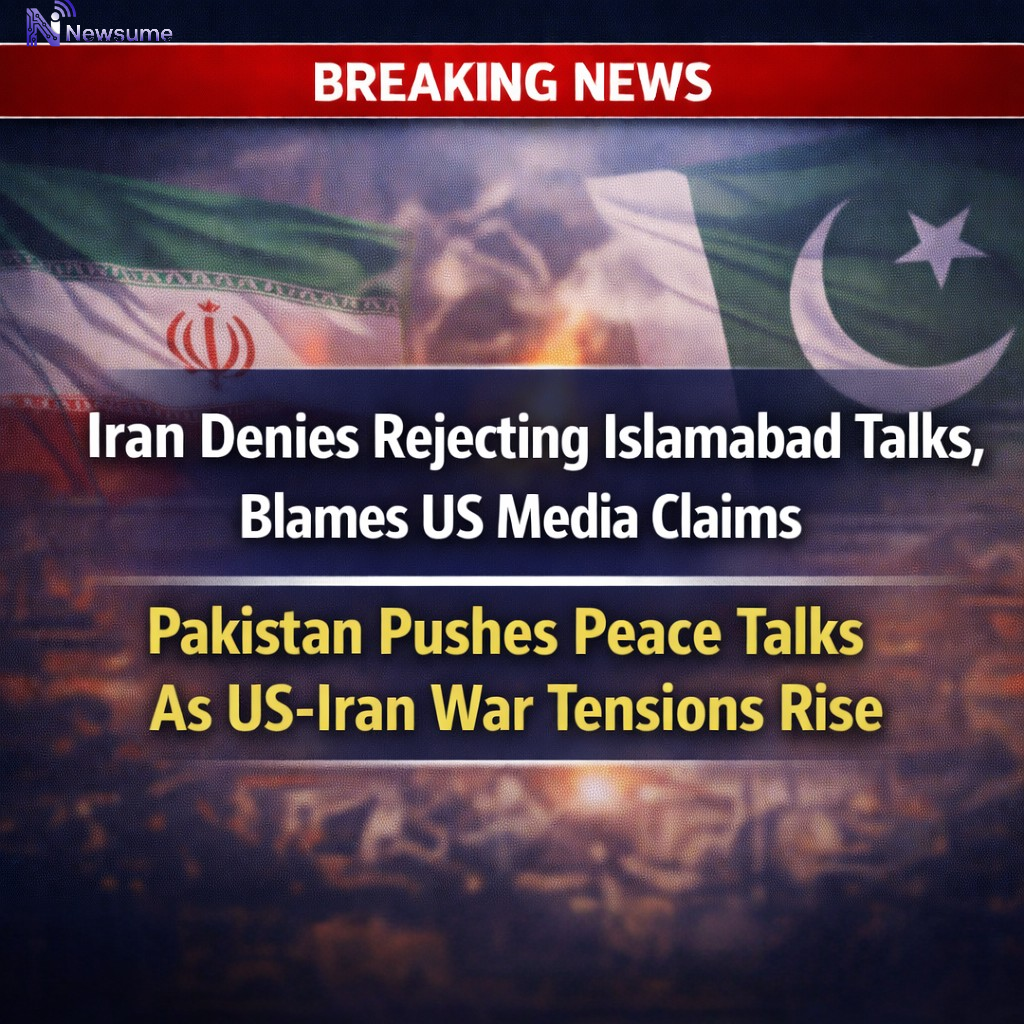
Iran has firmly rejected claims that it refused to participate in peace talks in Islamabad, stating that its position has been misrepresented by sections of the US media. The clarification comes as Pakistan continues its diplomatic efforts to mediate in the ongoing conflict involving the United States and Iran.
Iranian Foreign Minister Abbas Araghchi said that Tehran had never declined Pakistan’s offer to host negotiations aimed at ending the conflict. He emphasized that Iran values Pakistan’s role and remains open to dialogue, but only under conditions that ensure a lasting and fair resolution to the war. He also expressed gratitude to Pakistan for its support and efforts in facilitating peace.
The statement followed a report suggesting that Pakistan-led efforts to broker a ceasefire had stalled. In response, Pakistan’s Deputy Prime Minister and Foreign Minister Ishaq Dar welcomed Iran’s clarification, appreciating the openness shown by Tehran. Meanwhile, Foreign Office spokesperson Tahir Andrabi urged media outlets to rely on verified information, warning that speculation could mislead the public.
Pakistan has been actively positioning itself as a mediator by leveraging its relationships with global and regional powers, including the US, Iran, and China. Prime Minister Shehbaz Sharif had earlier offered to host meaningful negotiations, and Islamabad has since hosted diplomatic meetings and supported initiatives aimed at reducing tensions in the region.
Despite this, challenges remain. Iranian officials have indicated that proposed conditions from the United States are difficult to accept, and have expressed deep mistrust of US intentions. They also highlighted concerns about security risks for those involved in negotiations, citing recent developments in the region.
In conclusion, while Iran has denied rejecting peace talks in Islamabad, the path to dialogue remains complex due to ongoing conflict and lack of trust. Pakistan continues to play a key diplomatic role, but achieving a lasting ceasefire will depend on mutual agreement and improved regional stability.