
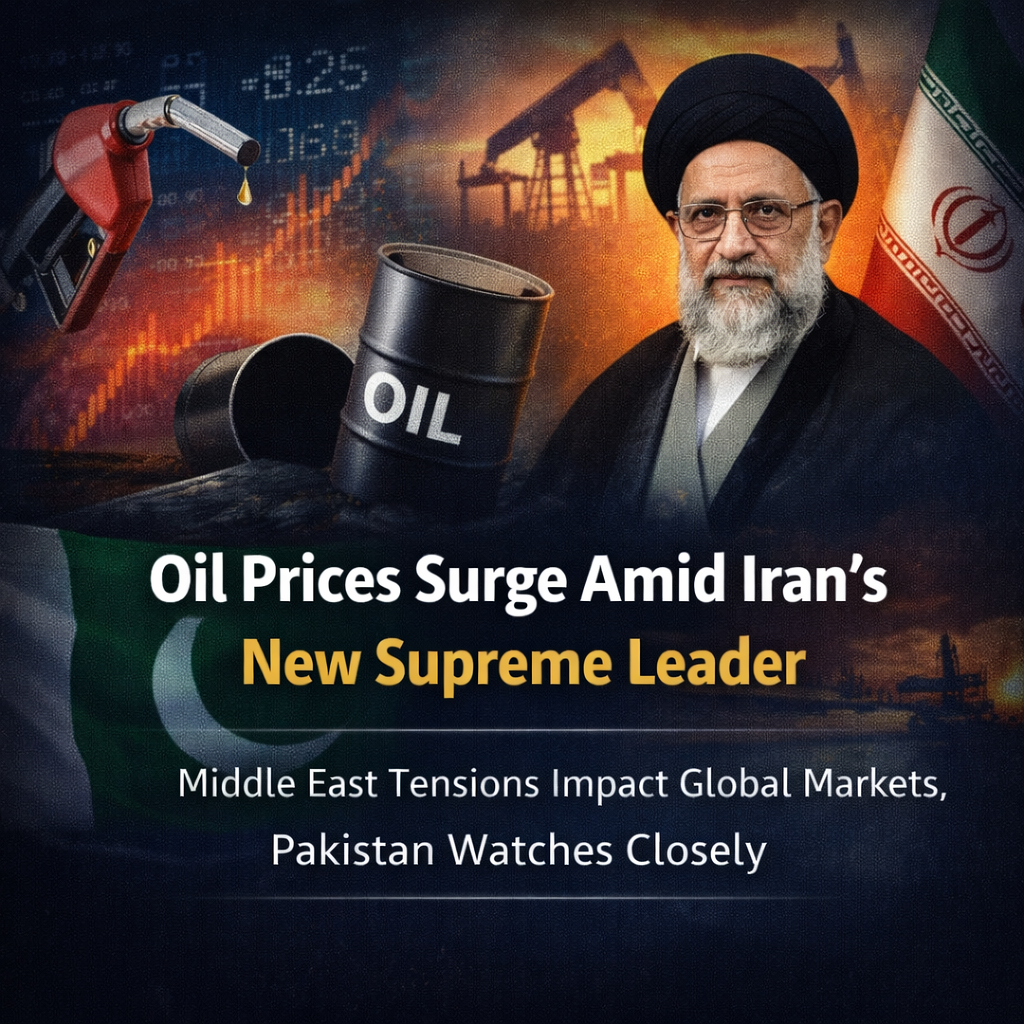
Tehran/Washington – Global energy markets experienced extreme volatility on Monday as Iran welcomed its new supreme leader, Ayatollah Mojtaba Khamenei, amid escalating tensions with the US and Israel. Brent crude oil prices surged to $119.50 per barrel before settling near $82, reflecting heightened uncertainty in the Gulf region, a key oil-exporting hub.
The appointment of Mojtaba Khamenei drew strong reactions internationally. US President Donald Trump criticized the move as a “bad idea” but suggested the Middle East conflict could end sooner than initially expected. Meanwhile, Russian President Vladimir Putin discussed potential rapid resolutions with Trump, including diplomatic engagement with Gulf nations and Iran.
Iranian state media showcased mass rallies across Tehran and other major cities, with citizens waving flags and portraits of the late Supreme Leader Ayatollah Ali Khamenei, signaling national support for the new clerical head. The Iranian government emphasized that its military strikes in the Gulf are defensive and targeted at US bases, not neighboring civilian populations.
Israel continued aerial attacks on strategic Iranian cities, including Tehran and Isfahan, prompting Iran to promise the use of heavier warheads and expanded missile coverage. Casualties have been reported, including three students in Lorestan province. Gulf states, including Bahrain and the UAE, have also been affected by Iranian strikes, with missile attacks causing infrastructure damage and fatalities among military personnel. NATO forces intercepted several ballistic missiles aimed at Turkiye, highlighting regional instability.
The geopolitical unrest has direct consequences for Pakistan and South Asia, where energy imports from the Gulf are critical. Surging oil prices threaten domestic fuel costs and inflation, prompting Pakistani authorities and businesses to monitor the situation closely. Analysts warn that continued Middle East hostilities could exacerbate economic pressures, affecting transportation, electricity, and household expenses across the country.
Amid the volatility, international diplomacy remains active. Global leaders are attempting to mediate, with efforts focused on stabilizing the Strait of Hormuz, a critical oil shipping lane. Analysts urge Pakistan and regional stakeholders to prepare contingency plans for energy security while encouraging public awareness of the evolving situation.
The international community continues to track developments, as the combination of new Iranian leadership, ongoing US-Israel military operations, and Gulf energy vulnerabilities create an unpredictable environment for global markets and regional stability.