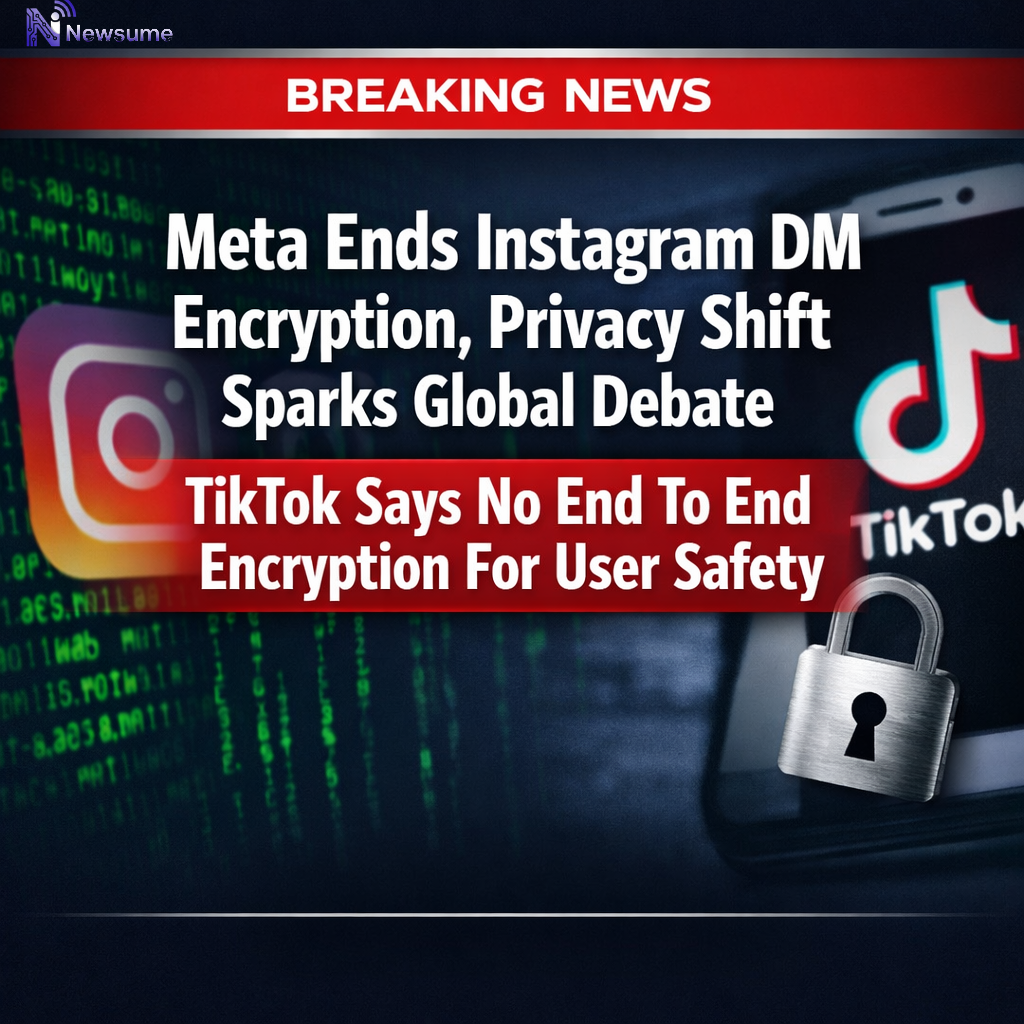
Meta has announced it will discontinue end-to-end encryption for Instagram direct messages starting May 8, marking a major shift in social media privacy policies. At the same time, TikTok has clarified that it has never offered end-to-end encryption, highlighting a broader industry move toward balancing user safety with privacy.
The decision by Meta reverses a feature introduced just two years ago. Once encryption is removed, the company will regain the ability to access and monitor message content. This change will allow automated content scanning, AI-powered moderation, and easier compliance with law enforcement requirements. Currently, encrypted messages cannot be viewed even by Meta’s own systems.
TikTok, on the other hand, maintains that its messaging system uses standard encryption methods during storage and transmission but does not provide full end-to-end encryption. According to the company, this approach is intentional and helps prevent misuse of the platform for illegal activities. Access to user messages is limited and controlled, only available to authorized personnel for safety checks or legal reasons.
Experts say the shift reflects growing concerns about online scams and cyber threats. With the rise of AI-driven fraud, including deepfakes and voice cloning, encrypted messaging platforms have become attractive targets for criminals. Industry professionals argue that full encryption can make it difficult for companies to detect and prevent such activities.
New regulations are also influencing these changes. Laws now require platforms to quickly remove harmful content, including non-consensual images and AI-generated material. Without access to message data, companies face challenges in meeting these legal obligations, increasing pressure to reduce encryption levels.
While safety advocates support the move, privacy experts warn it could expose user data to increased monitoring. The debate highlights a key question in today’s digital world: how to balance user privacy with the need for stronger security and fraud prevention.
In conclusion, Meta’s decision and TikTok’s stance signal a significant shift in how social media platforms handle private messaging. As cyber threats grow and regulations tighten, the industry appears to be moving away from complete privacy toward greater control and accountability.