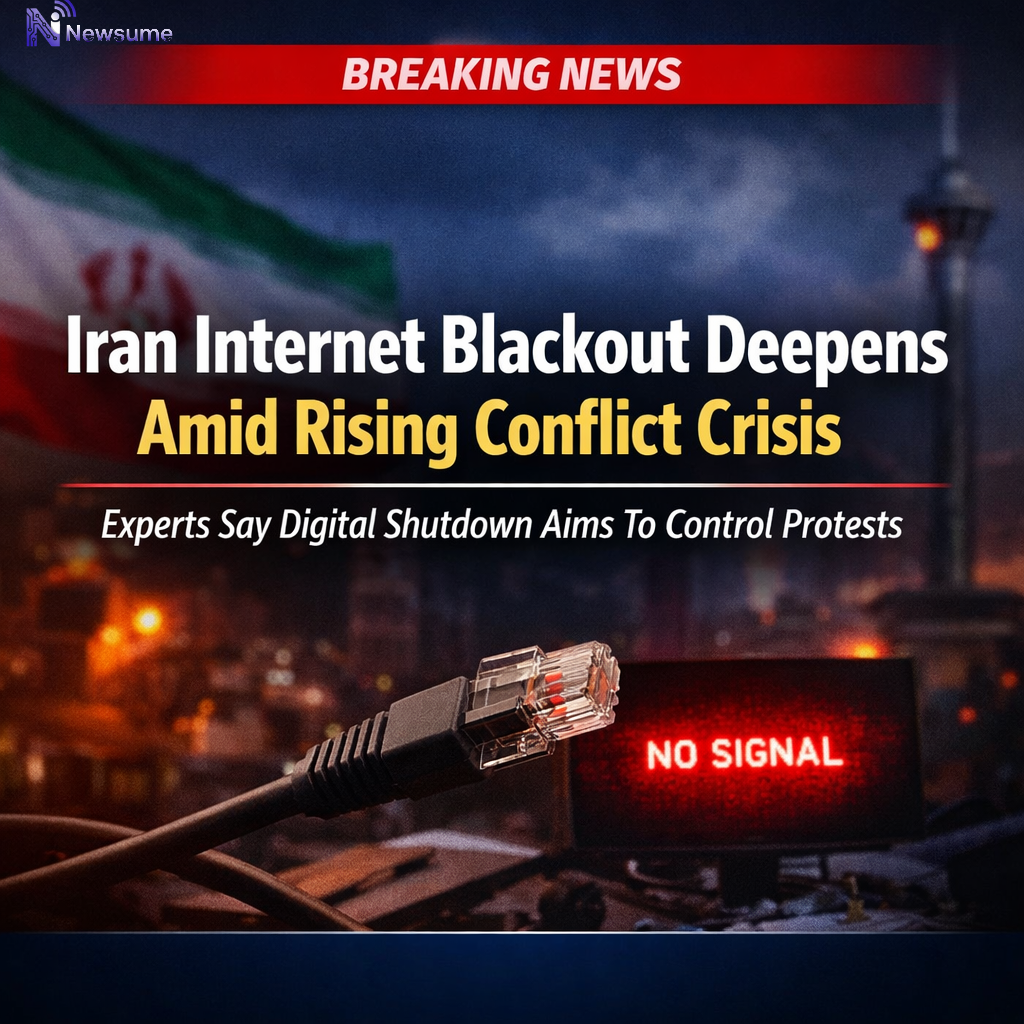
Iran has once again been plunged into a near-total internet blackout following recent military strikes, significantly limiting communication within the country and restricting the flow of information to the outside world. Analysts say the disruption appears to be largely intentional, aimed at maintaining control during a period of heightened political tension.
According to internet monitoring experts, only a small portion of the outage may be linked to infrastructure damage caused by airstrikes, such as potential fibre optic cable disruptions. However, most of the blackout is believed to be a deliberate move by authorities to tighten control over communication channels and prevent unrest from spreading.
Researchers specializing in digital censorship suggest the shutdown is part of a broader strategy to manage internal stability. They argue that unrestricted internet access could enable citizens to organize protests more effectively, posing a challenge to the government. By limiting connectivity, authorities may be attempting to reduce coordination among protesters and slow any potential escalation.
Iran has previously used similar tactics. Earlier this year, the country experienced a prolonged internet shutdown during widespread protests linked to economic issues. That blackout lasted nearly three weeks and reportedly helped obscure details of a violent crackdown on demonstrators.
The current outage is described as nearly complete, with only limited mobile services functioning domestically. Access to global communication platforms has been cut off, leaving many citizens unable to connect with the outside world unless they have alternative technologies such as satellite internet.
Experts warn that the blackout is increasing uncertainty and fear among the population. While some people may choose to stay indoors due to a lack of reliable information, others may gather in groups due to confusion and limited awareness of unfolding events. This creates unpredictable conditions for both the public and authorities.
Iran has a long history of controlling information flow, including efforts to block foreign broadcasts and restrict access to global media. The latest shutdown reflects a continuation of these policies, intensified by the current geopolitical situation and internal pressures.
The communication restrictions have also contributed to a growing sense of isolation among citizens, especially as travel routes are limited and borders face restrictions. With reduced access to information and fewer options to leave the country, many Iranians reportedly feel increasingly trapped.
In summary, the ongoing internet blackout in Iran highlights the critical role of digital connectivity during crises. Experts believe the shutdown is primarily a tool for maintaining control, as authorities seek to manage unrest and stabilize the situation amid rising conflict and uncertainty.