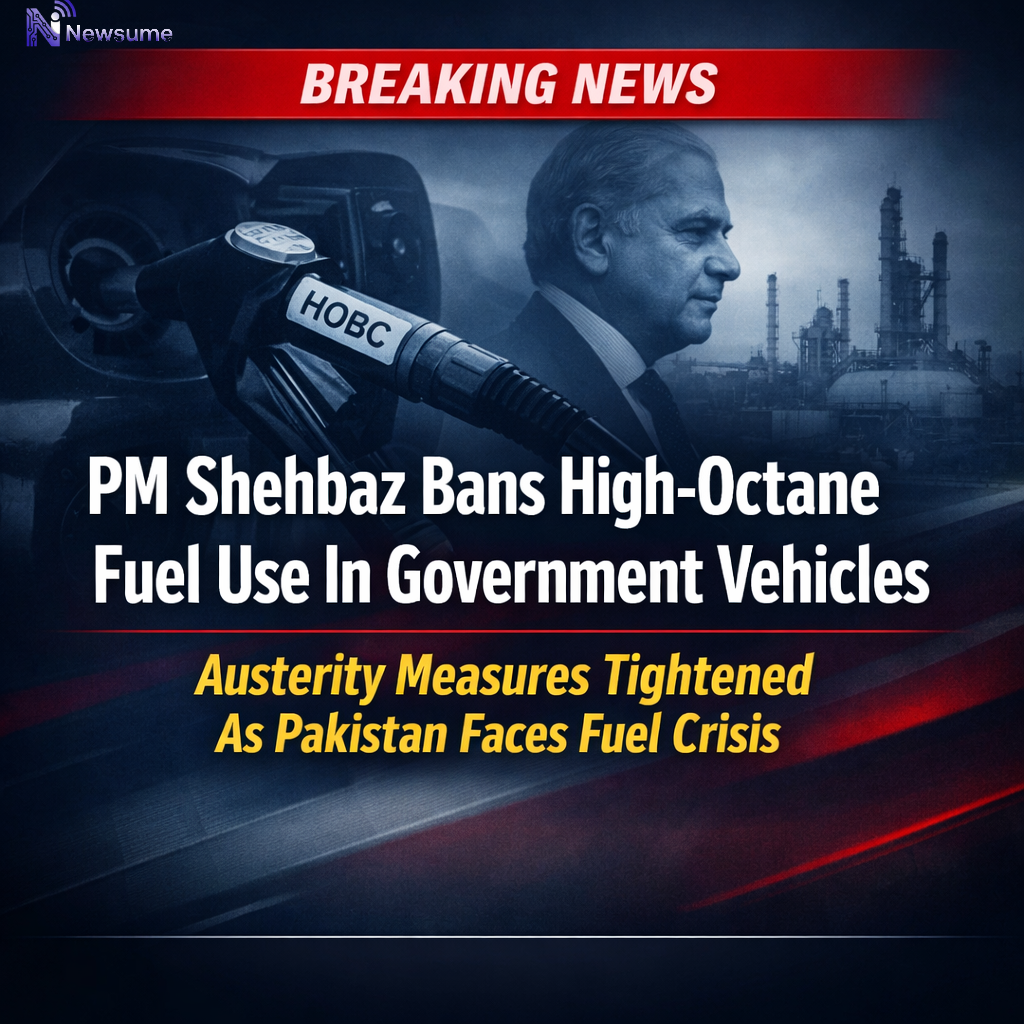
The government of Pakistan has introduced a strict ban on the use of high-octane fuel in official vehicles as part of wider austerity measures to manage the ongoing fuel crisis and rising global oil prices.
Prime Minister Shehbaz Sharif announced the decision on Monday, directing all government departments to immediately stop using high-octane petrol in official cars. Authorities have also been instructed to take action against any violations, with officials potentially required to pay for such fuel from their own pockets.
This move comes shortly after the government increased the levy on high-octane fuel by Rs200 per litre, bringing the total tax to Rs300 per litre. The step mainly targets luxury vehicle users, while fuel prices for ordinary vehicles used by the general public remain unchanged to avoid increasing transport and travel costs.
The decision is part of a broader response to the global oil crisis, which has intensified due to escalating tensions and conflict involving the United States, Israel, and Iran. These developments have disrupted oil supplies and increased pressure on Pakistan’s economy.
Officials estimate that banning high-octane fuel for government vehicles could save up to Rs9 billion per month. The government plans to use these savings to provide relief to citizens and reduce the economic burden.
In recent weeks, the government has introduced several austerity measures, including higher fuel prices, a 50 percent reduction in fuel allowances for official vehicles, and the implementation of a four-day work week. Additionally, around half of public sector employees have been directed to work from home, except for those in essential services.
The government has also urged the public to conserve fuel to prevent potential shortages in the coming days. While some proposals suggested further increases in petroleum prices, the prime minister has rejected these recommendations, instead calling for targeted relief measures for deserving segments of society.
Overall, the ban on high-octane fuel reflects Pakistan’s efforts to control fuel consumption, manage economic challenges, and respond to the ongoing global energy crisis.