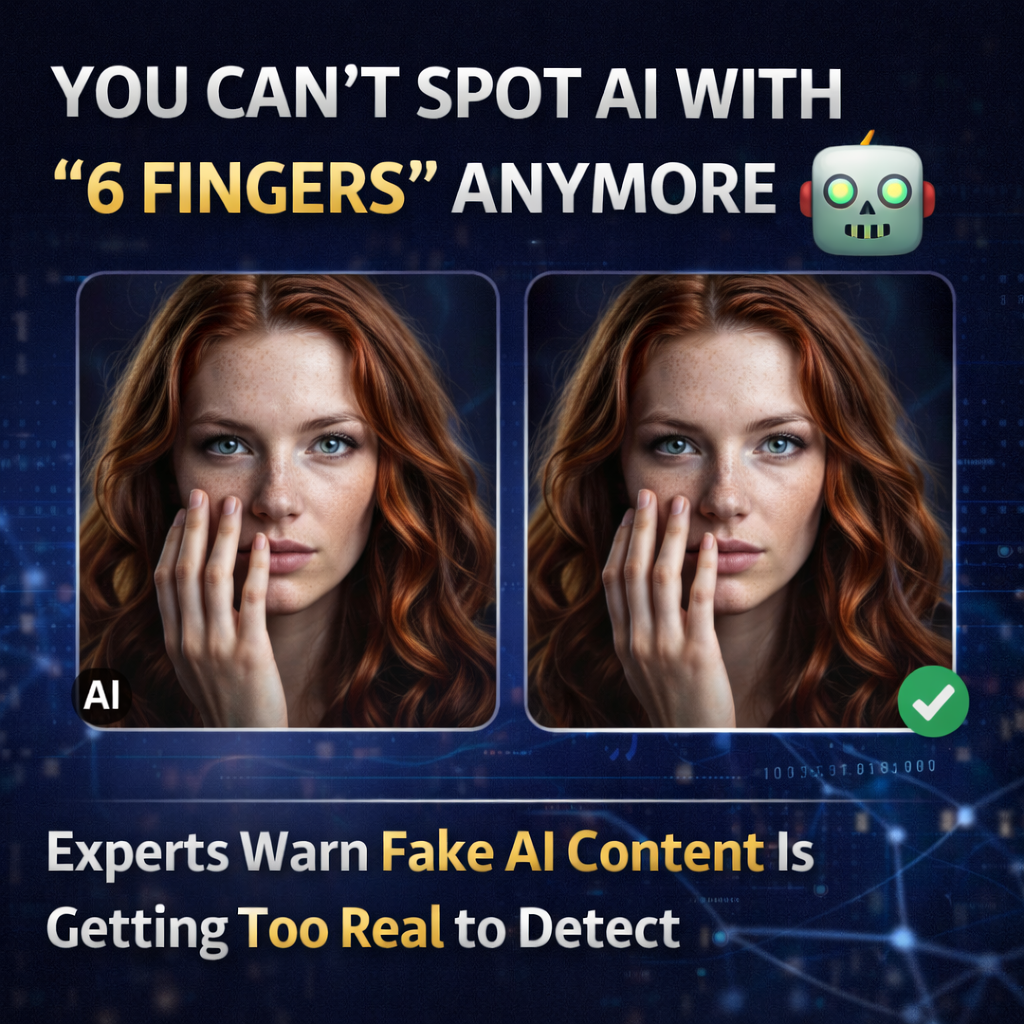
Artificial intelligence is improving so quickly that spotting AI-generated images is becoming increasingly difficult. In the past, people often identified fake images by obvious mistakes such as distorted hands or extra fingers. But experts now say those days are ending.
Why AI-Generated Content Is Harder to Spot
According to artificial intelligence researchers, modern AI systems have significantly improved their ability to generate realistic images, videos, and text. Earlier AI tools frequently produced visual errors especially with hands which made fake images easier to identify.
Today’s advanced AI models can create highly realistic visuals that closely resemble real photographs. This means traditional tricks for detecting AI-generated content, such as looking for six fingers or distorted facial features, are becoming unreliable.
Experts say people should focus less on visual clues and more on the source of the content.
Check the Source, Not Just the Image
AI specialist Professor David Hughes explains that the most reliable way to identify misleading AI content is to examine where the information comes from.
Trusted news organizations and verified platforms are generally accountable for the content they publish. If misleading information appears on their platforms, they are responsible for removing it.
However, social media posts that aim to provoke strong emotional reactions may be designed specifically to drive clicks or engagement. In these cases, users should pause and question the authenticity of the content.
AI Risks: Misinformation and Online Fraud
While artificial intelligence offers many benefits, it also introduces new risks.
One of the biggest concerns is misinformation, where AI-generated images or videos may be used to spread false narratives online. AI technology can also be misused for fraud or scams.
Experts recommend that users stay cautious when consuming digital content and always verify information through credible sources.
AI Is Expanding Rapidly
Artificial intelligence development is accelerating worldwide. Many regions are investing heavily in AI infrastructure such as data centers and AI research hubs.
Industries are also adopting AI in different ways. For example:
Manufacturing companies use AI to improve product safety.
Robotics powered by AI are performing dangerous tasks in hazardous environments.
Research institutions are developing new AI tools to solve complex problems.
These innovations show how AI is becoming deeply integrated into everyday life.
Environmental Concerns Around AI
Another issue people often raise is the environmental impact of artificial intelligence.
AI systems require large amounts of computing power, which consumes energy. To address this concern, technology companies are increasingly focusing on renewable energy sources and energy-efficient data centers.
Experts say the key is using AI responsibly while continuing to develop greener technology solutions.
The Future of AI
Artificial intelligence will continue to evolve, bringing both opportunities and challenges. While detecting AI-generated content may become harder, awareness and critical thinking can help people navigate the digital world safely.
Instead of fearing AI, experts encourage individuals to learn how the technology works and use it responsibly.
Quick Facts
What is AI?
Artificial intelligence refers to computer systems designed to perform tasks that normally require human intelligence, such as recognizing images, understanding language, and making decisions.
Why is AI content harder to detect now?
Modern AI models are far more advanced and can generate highly realistic images and videos with fewer visual errors.
How can people avoid AI misinformation?
Verify the source, check trusted news outlets, and be cautious of content designed to provoke strong emotional reactions.